§34i GewO · Overseas finance since 2019 · Spain · Portugal
Spanish mortgage for non residents: Mortgage in Spain – Spanish mortgage for non-residents – what fixed rate can you expect?
Loan-to-value: Spain up to 70 %, Portugal up to 80 % — of the lower of purchase price and valuation. Also possible: raise up to 80 % on a German property and up to 50 % on a Spanish one — together up to 100 % of the purchase, without selling the German property. Plus the developer stage payments during construction. As a Spanish mortgage broker we approach 30+ banks per case, since 2019.
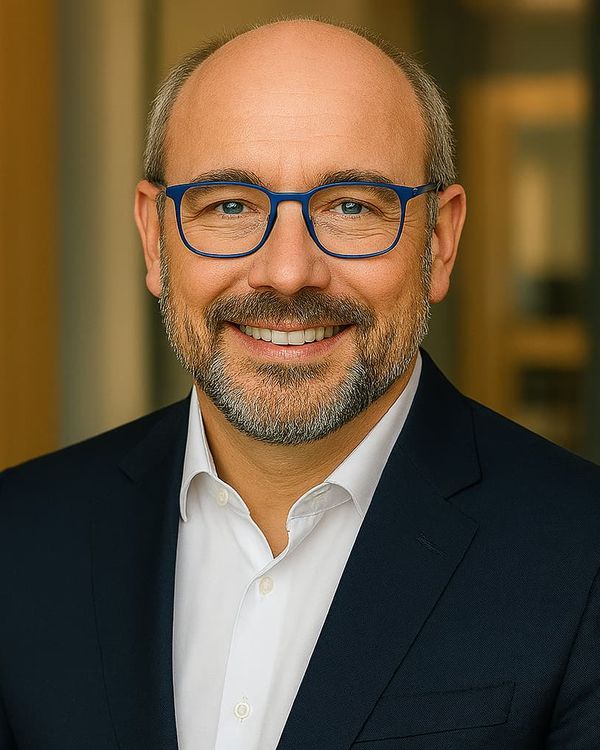
Siegfried PeriniSpecialist for Spain & Portugal · since 2019
What fixed rate can you expect on a Spanish mortgage for non-residents?
Mortgages in Spain carry fixed rates of 2.75 %–3.45 % with the bonificación and 3.75 %–4.45 % without; in Portugal 3.65 %–3.90 % with and 4.40 %–4.65 % without. This is our own bank survey as at 21.09.2026, with the 12-month Euríbor at 2.95 %. The bonificación is a discount against two to four bundled products.
Current rates
A Spanish mortgage for non-residents starts at a 2.75 % fixed rate, in Portugal at 3.65 %
Fixed rate
With bonificación
Without
Spain
2.75 %–3.45 %
3.75 %–4.45 %
Portugal
3.65 %–3.90 %
4.40 %–4.65 %
From our own bank survey, as at 21.09.2026 · 12-month Euríbor 2.95 % (monthly average August 2026). “With bonificación” means discounted against two to four bundled products. All ranges, variable and mixed.
Financing models · as of 21.09.2026
Variable, fixed or mixed — all three routes open
All three mortgage models are available in Spain and Portugal for non-residents too. Which route suits you depends on your risk appetite, investment horizon and the current market phase.
Tipo Variable
Variable mortgage
The rate is linked to the Euribor (12-month index) and adjusted annually. If the Euribor falls, your payment falls. Low early-repayment penalty (max. 0.25 % in the first 3 years, 0 % thereafter).
The rate stays constant for the whole term — independent of the Euribor. Maximum planning certainty. Terms up to 25 years.
Currently (Spain): 2.75 %–3.45 % with bonificación · 3.75 %–4.45 % without · Portugal: 3.65 %–3.90 % with bonificación · 4.40 %–4.65 % without. Example Spain · Example Portugal
Tipo Mixto
Mixed mortgage
A fixed rate for the first 3–10 years, then variable (Euribor + margin). Planning certainty at the start, flexibility long term. In 2026 the most popular model among German buyers.
Currently: fixed entry for 3–10 years · variable thereafter.
LTV & equity
Spanish mortgage for non-residents: how much is financed — and what capital sources exist?
Maximum loan-to-value ratios (LTV) for non-residents differ by country. In addition, property owners in Germany have a further way to raise capital.
And the rule that unlocks many cases regardless of LTV: the loan must as a rule be repaid by age 75 — with two borrowers, the younger borrower's age counts — both go on the title, minimum share 10 %. How the age limit really works.
Spain
70 % LTV (non-resident)
Spanish banks typically finance up to 70 % of the purchase price or the Tasación value (bank valuation) for non-residents — whichever of the two is lower always applies. The remaining 30 % plus roughly 10–13 % purchase costs (ITP, notary, land registry, lawyer, NIE) must be provided as equity.
Portugal
80 % LTV (non-resident)
Portuguese banks finance up to 80 % of the purchase price for non-residents — one of the most attractive LTV ratios in southern Europe. The bank uses the bank value (Avaliação), which may differ from the purchase price. Purchase costs in Portugal: roughly 10–11 % (IMT, stamp duty, notary, land registry, NIF).
Germany — second charge
80 % second-charge loan as an equity source
Anyone who owns a property in Germany can mortgage it up to 80 % as a second charge — even if it already carries a first loan. The capital raised serves as equity for the property purchase in Spain or Portugal. A sensible route without selling the German property.
* LTV ratios are guide values. The actual financing amount depends on creditworthiness, income, property value and the bank partner. The Tasación or Avaliação value can be below the purchase price — the bank always finances on the basis of the lower value. No binding financing commitment.
What few German-speaking brokers offer
Stage payments, paid-off property, German property: financing from one source — which bank branches cannot offer
The short answer. Spanish banks lend non-residents up to 70 % of the lower of price and tasación (around 30 % equity), they finance purchases, and on a new build they pay only at handover.
Three cases fall outside that grid — and those are the ones we work on: stage payments during construction, a charge on an already paid-off Spanish property up to 50 % of the tasación, and a charge on a German property up to 80 % of its lending value. Of the 30+ lenders we approach per case, one writes the stage payments and two the existing-property charge (Perini Market Check, as at 01.09.2026).
Combined: German property up to 80 %, Spanish property up to 50 % of the valuation, stage payments during construction — together up to 100 % of the Spanish purchase, from one source. §34i GewO in Germany, Portugal via a locally licensed broker. Few German-speaking brokers offer this.
The usual lenders pay at handover — and after that the Licencia de Primera Ocupación usually takes three to six months in practice, occasionally up to two years. Until then the buyer bridges. Not with us: equity in first, then the bank pays each instalment in full, straight to the developer.
Up to 50 % of the tasación, the existing property free of charges, funds demonstrably used in Spain — purchase, renovation or new build. Selling in order to buy costs tax, commission and the growth still to come.
Up to 80 % of the German lending value — as equity or as the whole purchase price. The Spanish property stays unencumbered and you arrive as a cash buyer. § 34i GewO in Germany; in Portugal through a locally licensed intermediary.
All figures are orientation from our practice, not a commitment — subject to credit assessment, case by case. All three structures
New-build & construction phase
Buying off-plan: almost no Spanish bank finances the construction phase — one of 30+ does
Buying from a Spanish developer means paying the reservation, the private contract and the milestone instalments out of your own funds — often 20 to 30 per cent of the price across 18 to 36 months. The mortgage only arises at completion. That gap is why high-quality new-build projects fail even where the wealth exists — it is simply tied up in a property back home.
This is exactly where we work: raising capital against German property for the construction phase, Spanish mortgage at the escritura. Two legal systems, one purchase — §34i GewO in Germany; in Portugal through a locally licensed intermediary.
A first orientation for your financing plan. For an individual offer, contact us directly.
Country
Not every bank lends against income in a foreign currency — we approach the ones that do. For the full evaluation, enter your income converted into euros.
Your estimate
Monthly payment(calculation rate—)—
Loan amount—
Loan-to-value (LTV)—
Purchase costs—
Our brokerage focus starts at a loan amount of around €300,000 — we arrange smaller loans too and will give you an honest read on whether it makes sense in your case.
Full evaluation by email
Sent to you by email: the equity you actually need including purchase costs, every cost item, total interest and total cost — and, with your income, the affordable instalment under the 35 % rule, the maximum loan and the maximum purchase price.
Estimate, no guarantee. The interest rate is the calculation basis for this example, not a market rate or commitment — the rate you actually achieve depends on your credit profile, the property and the bank. Spain: max. 70 %, Portugal: max. 80 % LTV for non-residents. Purchase costs by region as on our purchase-costs page; the other items are guide values.
Model calculations without guarantee. Not binding offers. Terms vary depending on credit profile, property and bank. No tax or legal advice.
Free
Get the full evaluation by email
Everything the calculator does not show on the page: equity needed including purchase costs, every cost item, total interest and total cost — and, with your income, how much you can afford under the 35 % rule. We approach 30+ of 45 banks for your case (31 in Spain, 14 in Portugal); which ones fit, we discuss in person.
A Spanish new build is paid in stages as construction proceeds, not in one sum at completion. Banks issue the mortgage only for the finished property — so the gap between the private contract and the escritura has to be bridged. The earlier that is planned, the cheaper it is.
What gets financed is the lower of purchase price and tasación. The difference has to come from your own funds — and it usually surfaces only once the private contract has long been signed.
Your own, an inherited one — or your parents' finca, if they help with their share. In Spain up to 50 per cent of the tasación can be released, in Germany up to 80 per cent of the lending value. Combined, that can carry the Spanish purchase in full.
Age is not the obstacle it is made out to be. The loan normally has to be repaid by the age of 75 — but with two borrowers the calculation runs on the younger one — both go on the title, minimum share 10 %. Ages 62 and 52 therefore mean 23 years of term instead of 13. How the age limit actually works
Spain · mandatory for every buyer
No NIE, no property
The Spanish tax number for foreigners (NIE) is mandatory for every property purchase in Spain. we show you step by step how to apply for it — from the consulate to the notary.
As a broker we coordinate the whole process — personally and transparently.
01
Free first consultation
We clarify purchase price, equity and which model — variable, fixed or mixed — suits you.
02
Bank comparison
We compare Spanish, Portuguese and German conditions and present you with the best offers.
03
Application coordination
We guide you through the application process and coordinate all required documents.
04
Financing commitment
After the bank's approval we accompany the rest of the process up to the notary appointment (Escritura).
Free checklists
Mortgage checklist Spain & Portugal — what do I bring to the bank?
Two compact PDF checklists for your mortgage in Spain or Portugal: all documents, key facts and current conditions — straight from practice. Choose Spain, Portugal or both countries.
Non-resident mortgage, purchase costs, NIE/NIF, wealth tax, CPCV and more — the full practical knowledge base at a glance.
Why Perini Finance
Mortgage broker Spain and Portugal — specialised in overseas finance since 2019
Bank network
Spanish, Portuguese & German partners
Access to 45 banks in Spain and Portugal, plus German partners — all three financing models (variable, fixed, mixed) open.
LTV ratios
ES 70 % · PT 80 %
Attractive LTV ratios for non-residents. A German second-charge loan up to 80 % is also possible as an equity source.
Security
Often no extra collateral needed
In many cases your overseas property is sufficient as security — a debt-free home in Germany is then not required.
Language
Everything in your language
Advice, communication, documents — we bridge the language and system barrier. Plus DE, FR, ES, RU.
Permit
Licensed under §34i GewO
Verified permit under §34i GewO. Portugal through a locally licensed intermediary. Regulated, reputable brokerage.
Experience
Active since 2019
Seven years of experience with buyers in Spain and Portugal. Over 1,000 properties reviewed. Hundreds of successful placements.
Bank network
45 banks for Spain and Portugal — plus German partners
31 Spanish and 14 Portuguese institutions are listed in the public overview — per case we approach 30+ suitable lenders directly. As independent brokers we compare and negotiate for you; depending on your profile (creditworthiness, equity, property type, region) different lenders are strong.
Major Spanish banks
BBVA · Santander · CaixaBank
Established non-resident programmes, broad product range. BBVA and Santander have a German-speaking international desk. CaixaBank is strong in Catalonia.
Cajas & cooperatives
Regional · conservative
Local savings banks with a regional focus. More conservative LTV, but often cheaper fixed rates for established profiles.
Non-resident specialists with LTV up to 80 %. CGD as the largest state bank, BCP with a strong premium segment.
International private banks
Premium · wealth management
For high-net-worth buyers. Often combined with wealth management. From around €500,000 purchase price.
Non-resident specialists
Focused on overseas buyers
Banks with dedicated non-resident products, often with English/German-speaking international desks and shorter processing times.
German bank partners
For mixed financing
German banks for the second-charge loan on existing German property — as an equity source for the ES/PT purchase.
The banks in detail
The most important banks in both markets that we compare for your financing. Which one fits your profile depends on creditworthiness, property and region — not the brand.
Cajasur, Laboral Kutxa, Grupo Caja Rural, Caja de Ingenieros · ING España, Openbank, EVO Banco, MyInvestor, Pibank, Triodos Bank · Deutsche Bank España, UCI, Targobank, Banco Mediolanum, Andbank España.
Especially active for non-residents: in Spain Bankinter, UCI, ING España and Deutsche Bank España; in Portugal Santander Totta and Bankinter. As at 07.09.2026.
As independent brokers we work on a success basis — you only pay when we secure financing that you actually accept. The first consultation, bank comparison and application coordination cost you nothing as long as no deal is concluded.
Straight talk
We also say an honest No
Not every purchase should be financed — and when that is the case, we say so. Sometimes the best advice is to renegotiate the developer's payment plan, choose a different property, or wait for the tasación first. We review your documents and tell you directly whether financing is feasible or not. That No is part of the advice — we live on trust built over years, not on a quick deal.
Client voices
What clients say about working together
Verified reviews from ProvenExpert — embedded statically, without trackers. German reviews shown in English translation.
★★★★★
“Even in difficult situations Siegfried Perini keeps a cool head! Absolutely recommended!” (translated)
Client · ProvenExpert
★★★★★
“Even with difficult constellations you get help here. Questions are answered promptly. Alternatives are named and explained. Conditions are definitely no worse than elsewhere — but the service is clearly better.” (translated)
B.W. · ProvenExpert
★★★★★
“Very good cooperation! Very competent and open. Quick review of documents, and Mr Perini tells you directly whether financing is possible or not.” (translated)
Y.H. · ProvenExpert
Latest
From the blog
Euribor updates and market reports on Spain and Portugal financing for non-residents — newest articles first.
The agent pockets 0.7 to 1.1% of the loan for passing you to 'his' bank — buried in the rate, absent from the mandatory disclosure sheet. In one Portugal case, €71,770 too much.
Market reports and Euribor commentary on the blog.
The route for non-residents, with the licence details and the lender panel set out in full, is on non-resident mortgage in Spain.
For professionals
You advise, and the case sits in Spain?
Tax advisers, lawyers, wealth managers and estate agents keep facing the same two questions: will anyone finance this at all — and does referring the client make me a regulated intermediary? We answer both on a page of their own, with the case types we take on, the size from which it pays for both sides, and the line between referring and intermediating.
What we don't handle ourselves is handled by our wife and partner Olga on one of the sister sites. Everything from a single source, without commission chains. Three platforms in Germany, Spain and Portugal.
Investment property with heritage depreciation, QNG new builds and §7b special depreciation in German cities. Industry experience as managing director since 1992.
Independent property finance for investors, expats and non-resident taxpayers. KfW combined with all regional development banks. Advice in German and Russian.
Olga Nikushkina · D-W-132-ZUCB-95 · intermediary register, IHK Mittlerer Niederrhein. Siegfried Perini operates under this licence.
Supervision
IHK Mittlerer Niederrhein
Nordwall 39, 47798 Krefeld. Public register: vermittlerregister.info.
EU cross-border services
Spain
Brokerage as a cross-border service (no Spanish branch).
Professional indemnity
Allianz Deutschland AG
Königinstraße 28, 80802 München. Geographic scope: European Economic Area (EEA).
Author & regulatory separation. Content author: Siegfried Perini. Mortgage brokerage in Spain and Portugal is carried out under the §34i permit of Olga Nikushkina; in Portugal through a locally licensed intermediary. This page does not replace legal or tax advice. Conditions depend on creditworthiness, property and bank — no binding financing commitment.
Who pays the broker for your Spanish mortgage — and how can the independence be checked?
The fee for arranging a Spanish mortgage comes from the client, not from the bank, and only if the mortgage completes. That single fact decides everything else: a broker paid by bank commission can only present lenders that pay one. We put the prepared file in front of lenders that pay nothing at all — including online banks no commission-based broker approaches, because the work does not pay for itself.
Access covers 45 banks in Spain and Portugal (31 Spanish, 14 Portuguese), plus German partners; 30+ of them are approached per case. The licence under § 34i(1) and § 34c of the German Trade Regulation Act carries adviser-register number D-W-132-ZUCB-95, entered on 26 September 2016 with IHK Mittlerer Niederrhein, with professional indemnity cover at Allianz.
Every one of these entries can be checked free of charge at vermittlerregister.info. Advice is given in five languages (DE/EN/FR/ES/RU). The fee page sets out how it is calculated.
Frequently asked questions about mortgages in Spain and Portugal
Mortgage broker in Spain: what does the service cost and what is included?
The first consultation is free, and there is no fee without a deal. We approach 30+ banks per case and arrange financing under the §34i GewO licence, with Portugal handled through a locally licensed broker. We also calculate against the rate discount whether the bonificación pays off for you before you sign.
What does a mortgage in Spain and Portugal cost for a non-resident?
Fixed rates in Spain run at 2.75 %–3.45 % with the bonificación and 3.75 %–4.45 % without it; in Portugal 3.65 %–3.90 % with and 4.40 %–4.65 % without. The basis is our own ongoing bank survey, as at 21.09.2026, with the 12-month Euríbor at 2.95 % (monthly average August 2026).
“With bonificación” means a discounted rate against two to four bundled products, whose running costs have to be set against the saving. A representative example under § 17 PAngV is on this page. All ranges, variable and mixed
I'm buying an off-plan new build in Spain. Who finances the developer stage payments during construction?
We do. Of the 30+ lenders we approach per case, one writes the stage payments during construction (Perini Market Check, as at 01.09.2026) — most lenders pay only at handover, once the Licencia de Primera Ocupación is granted. Our structure has the bank pay each instalment in full, directly to the developer, as it falls due — after your equity goes in first, based on the tasación. See the stage-payments guide.
Who finances a property purchase on Mallorca for non-residents?
We do — Siegfried Perini, mortgage broker for non-residents in Spain since 2019. Spanish banks typically finance up to 70 % of the purchase price or the Tasación value, whichever is lower, and Mallorca is one of our focus regions (ITP from 8 %, mind the ETV licence). Of 45 banks in the network, we approach the 30+ that fit your case directly. See the Mallorca region guide.
I'm a non-resident buying in Portugal and need a mortgage. Which brokers specialise in non-resident financing in Portugal?
We do — Portugal is one of our two core markets alongside Spain. Portuguese banks finance non-residents up to 80 % LTV, one of the most attractive ratios in southern Europe; our network includes non-resident specialists such as CGD, Millennium BCP, Santander Totta, Novobanco and BPI. Purchase costs run roughly 10–11 % (IMT, stamp duty, notary, land registry, NIF).
Is there a Spanish mortgage calculator for non-residents?
Yes — the free mortgage calculator Spain & Portugal on this page gives a first estimate of your monthly payment, loan amount, LTV and purchase costs by region; the total cost and equity needed come with the full evaluation by email. Use it here.
What documents does a non-resident need for a Spanish mortgage application?
The core items are the NIE (mandatory for every purchase), proof of income assessed under the 35 % debt-service rule, proof of equity, and the property's Tasación. The full mortgage requirements checklist sets out every document; you can also request our free PDF checklist.
I'm a UK citizen (post-Brexit) buying a villa on the Costa del Sol for 600k and need a non-resident mortgage — who arranges this and what LTV can I expect?
Siegfried Perini arranges non-resident mortgages for the Costa del Sol (Marbella & Málaga, ITP 7 %) as one of our focus regions. Spanish banks typically finance up to 70 % of the purchase price or the Tasación value, whichever is lower — on a €600,000 villa that is an indicative €420,000, subject to credit assessment, with the remaining 30 % plus roughly 10–13 % purchase costs as equity.
Let's talk about your mortgage in Spain or Portugal
Siegfried Perini · specialist for Spain & Portugal · since 2019. Free, without obligation. Perini Finance & Property (Spain & Portugal) is the foreign business of owner Olga Nikushkina (§34i GewO).
Siegfried Perini has been the on-the-ground brand representative and your personal point of contact since 2019. WhatsApp +49 177 3272788 · Phone Spain +34 635 422 834 · Phone Germany +49 2151 3293344 · Email info@perini.es Reply usually within 24 hours · video call, phone or in person in Gandia · No tax or legal advice
NIE, Hipoteca no residente, ITP and more — every term from our glossary with its own in-depth article.
Content by Siegfried Perini — local brand representative since 2019, active in real estate since 1992, entered in the German intermediary register (§ 11a GewO) as a person directly involved in brokerage and advice. Point of contact for German-speaking buyers in Spain and Portugal. Brokerage by Olga Nikushkina, mortgage credit intermediary under § 34i German Trade Regulation (GewO); in Portugal through a locally licensed intermediary.
Last updated: 3 October 2026
Your adviserSiegfried PeriniSpain & Portugal specialist